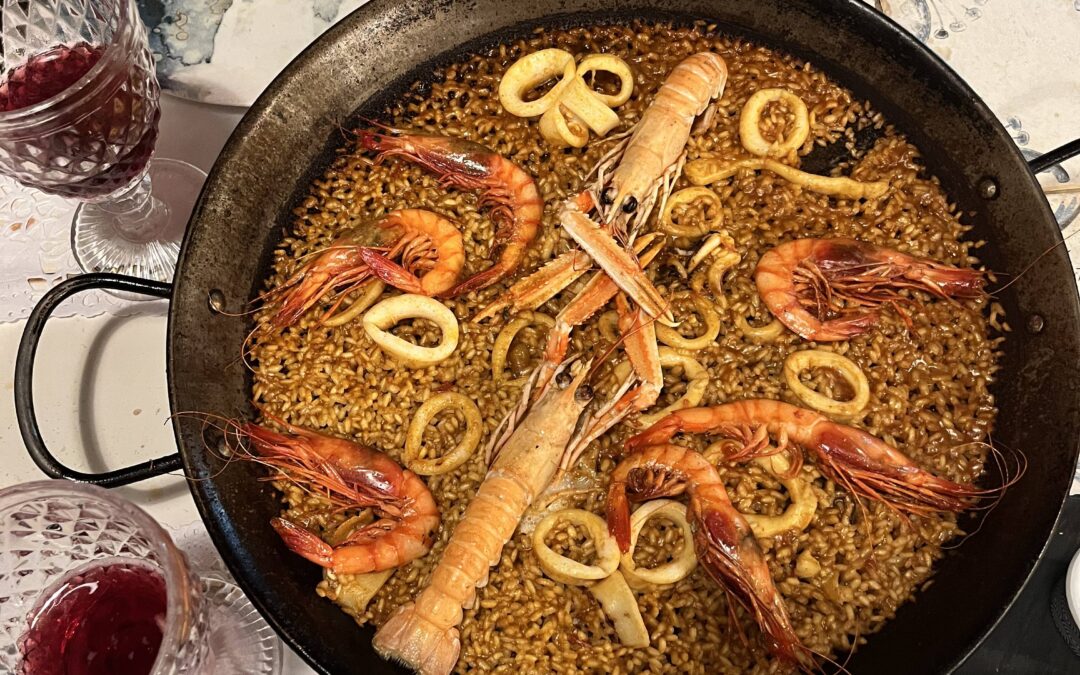
Sometimes the trick to finding the best places comes down to just wandering and trying something new. The first time Cheyenne and I landed in Europe was in Barcelona, Spain and after checking into the hotel, we were starving. Determined for an “authentic” experience we wandered looking for one of Spain’s most famous dishes - Paella. In finding the perfect hole in the wall restaurant, we learned a ton about what paella is, what to do and what not to do when ordering paella, and how to not take yourself too seriously.
What is Paella?
Paella is a rice dish originally from the Valencia, Spain, about 3-4 hours south of where we landed in Barcelona. Typically with short grain rice seasoned with saffron and other spices, a Paella is composed of layers as it cooks down undisturbed. This allows it to develop a nice crispy socarrat on the bottom, while the toppings such as shrimp, squid, chorizo, or rabbit help develop flavor throughout. The best part? After it’s finished in a wood fire oven, you eat all of that crispy flavorful rice straight out of the pan with your favorite people, making it not only a great celebration of Spain’s flavors, but a fantastic sense of community.
The Restaurant - La Paella De Su (Su’s Paella)
After checking into the HCC Regente and settling in, we realized how hungry we are and knew we wanted to try some authentic paella. After wandering for a quick 15 minutes we look across the first major street we come across (Av. Diagonal) and see this delightful gem - La Paella De Su.
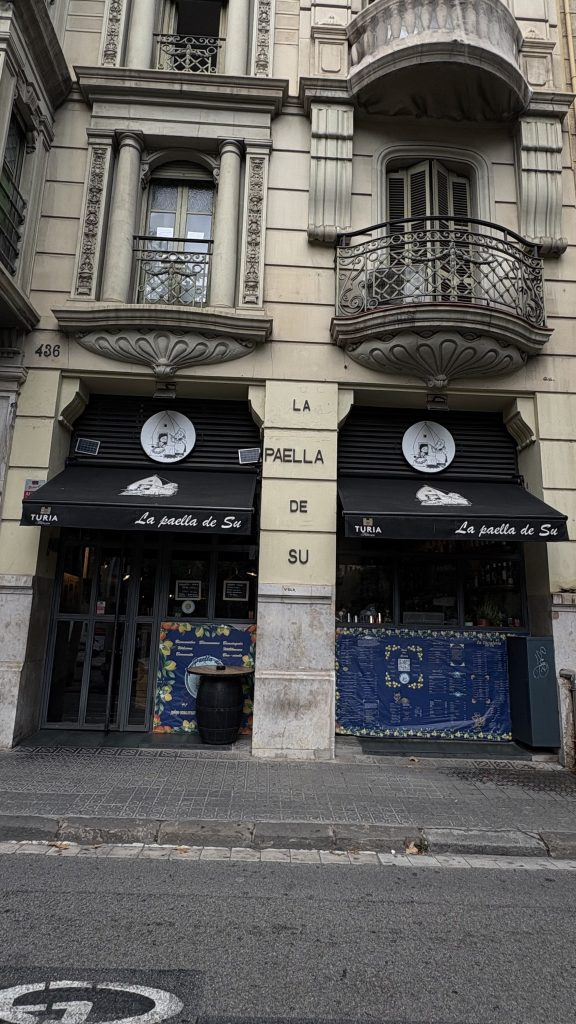
Being a digital marketer by trade, there was something very charming about the clip art-esque hand drawn logo and looking in it was evident that it’s a favorite among locals. As we enter its clear we’ve made a mistake. They’re swamped, but the smell is remarkable and we knew the wait would be worth it. But in true mom and pop hospitality, the man behind the bar as we enter immediately tries to find us a spot, and after a few minutes succeeds with a family leaving a 4 top. In reading the menu we learn more about paella as a dish, the socarrat, how they cook it, and it becomes clear that this place not only has good food, but cares about the tradition of paella. In the menu they even talk about how lemons should NEVER be served with a seafood paella - while its common practice restaurants usually use that to cover up bad seafood. If lemons immediately come out with it, avoid!
The Meal
With a pitcher of sangria on the table they bring out some bread and tomato and garlic oil. Criminally underrated. The olive oil that combines the tomato and garlic was delicious and it was some of the softest bread I’ve ever eaten (okay maybe I WAS that hungry) but still. The freshness of the sangria (which I almost never order, I’m a beer and whiskey guy, but when in Rome…. Or Spain) combined with the care of that bread and tomato and garlic oil was the perfect start to the meal. And then the Paella came.
Now La Paella De Su has 16 different types of paella. At the time, we had seen it made on TV, but had never tried it. 16 types of a dish you’ve never had is a bit intimidating, especially when you typically fall into the “get several small types so we can try a bit of everything” crowd and it’s a dish where you can’t do that. You get one big one for the table to share (or maybe 2 if you have a big party) and just have to commit. So when staring at the options that included the very traditional (Grandpa Bernat’s with chicken and rabbit) to the extreme (The Black One cooked in squid ink with prawns) we went with one we thought would celebrate the summer and region well - The Red One with large spot prawns and calamari.
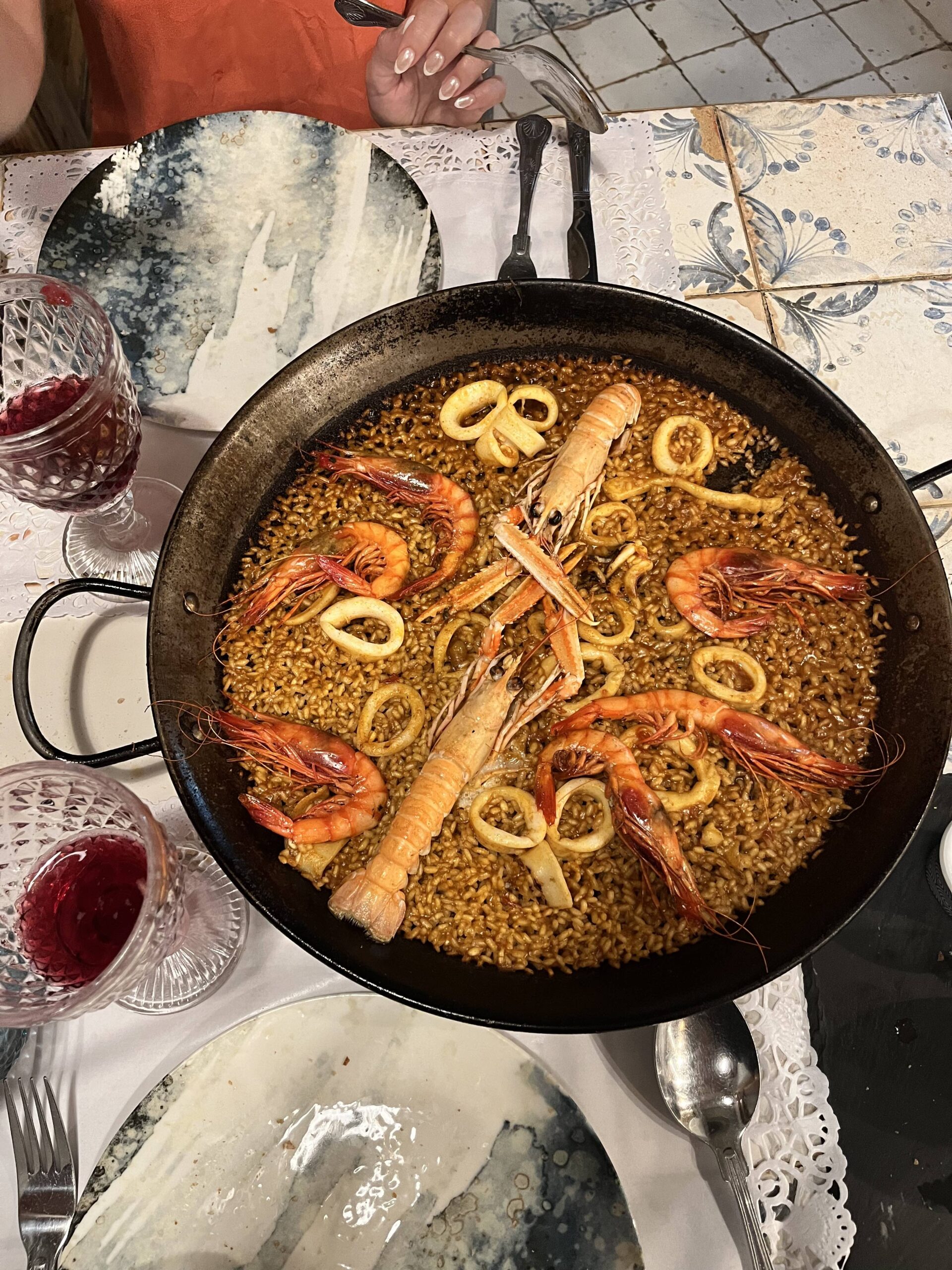
What we did not expect was what we got - what looked like 2 baby lobsters staring at us in the face along with a sea of shrimp in a juicy, crunchy delight. The seafood here was still the freshest I’ve ever had in a restaurant and I’ve lived on the coast my whole life. Switching from scraping the bottom of the well loved pan for every spoonful of savory socarrat to cracking the shell from a crustacean to pouring another glass of sangria (yes we went through 2 pitchers) is a memory we’ll never forget.
Over the course of the meal the restaurant started to thin out (in Spain they eat around 8-9pm usually and us being American and our first night there… we did not) and with the heat the power went off twice. Not a soul panicked, it was business as usual as the same man that greeted us from behind the bar clicked the power back on. Sipping on more sangria it was clear that it was just another day in Barcelona making great paella.
Lessons Learned from Great Paella
We were in Spain for another week, going from Barcelona to Madrid and then Malaga for our friend’s wedding. We ordered paella 2 more times and neither time had the depth, love or socarrat as La Paella De Su. All of our friends would be raving over how good the pile of spanish rice was in the middle of the table and Cheyenne and I would just give each other a glance, knowing that this was a good large rice dish - but no paella. Even when trying to make it myself I’ve found it impossible to get the depth from the briny seafood and rich saffron to seep into the rice and allow it to get that characteristic crunch on the bottom. Paella is a dish that takes years to be able to develop and do correctly, combined with needing the right technique, equipment and care. Without the right ingredients, the rice won’t get the depth you need. Without the heat and the pan you can’t develop the socarrat. Without the years of experience and the right company, you can’t develop the core memory.
Paella is a lesson in what community can give you, a dish you eat as a community from the same pan, learning what you can from the years of experience that it takes to make it there, from both the rice and the people.